Find articles, news, topics and more...
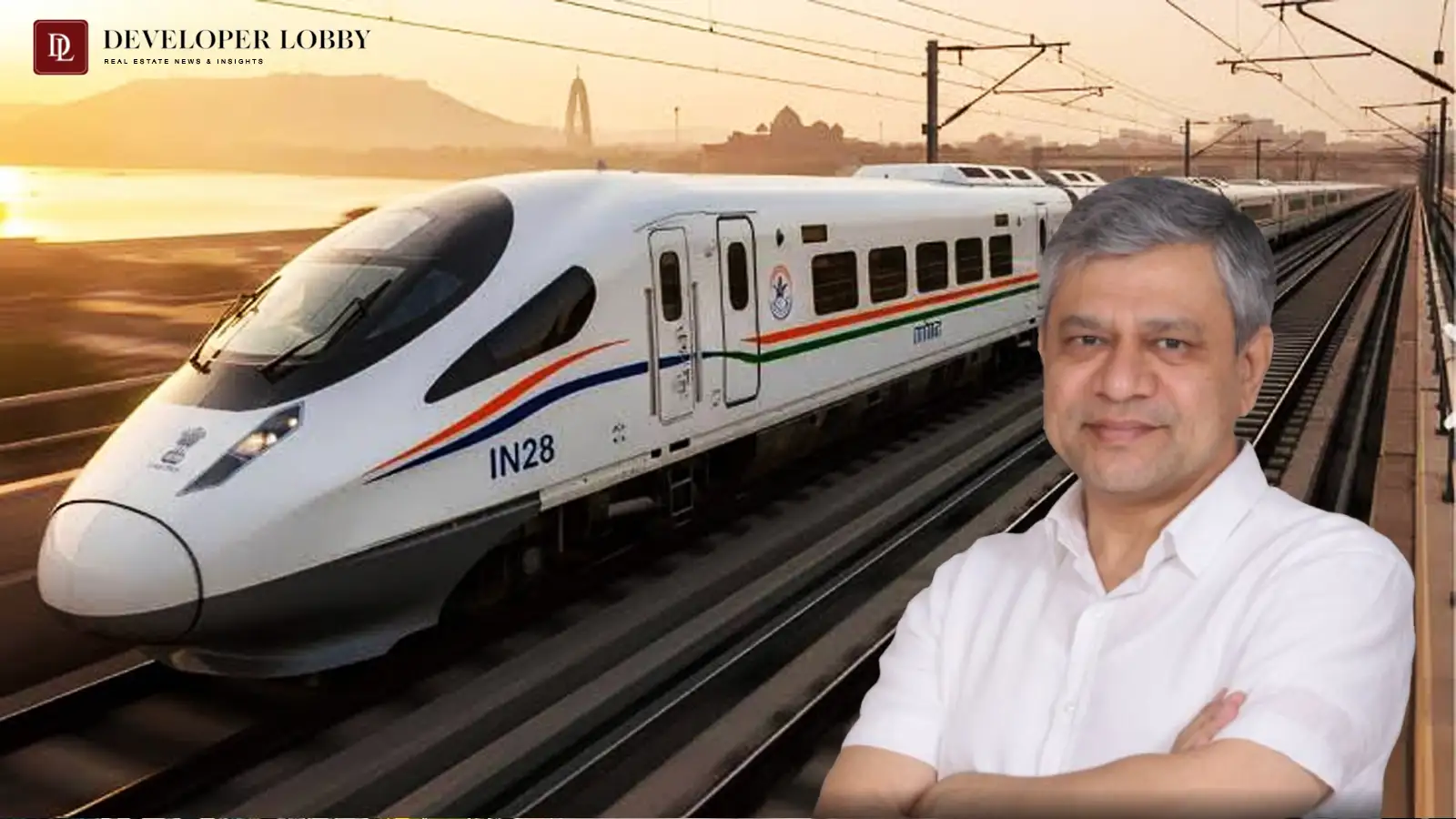
Union Railway Minister Ashwini Vaishnaw said the Surat-Bilimora section of the Mumbai-Ahmedabad High Speed Rail (MAHSR) corridor will be the first to begin operations in 2027. The improved connectivity is expected to support real estate growth in Surat, Vapi and Ahmedabad.
India's first bullet train is expected to do more than transform intercity travel. The Mumbai-Ahmedabad High Speed Rail (MAHSR) corridor could also reshape property markets across western India by improving connectivity and attracting fresh residential, commercial and infrastructure-led development.
Union Railway Minister Ashwini Vaishnaw announced that the first operational section of the country's maiden bullet train project will begin services on August 15, 2027. The Surat-Bilimora stretch will be the first section to open, while the remaining parts of the 508-km corridor will become operational in phases.
Speaking at the HYSEA GCCS & IT Roundtable at the Novotel Hyderabad Convention Centre, Vaishnaw said the Mumbai-Ahmedabad High Speed Rail corridor has entered its next phase of development.
After the Surat-Bilimora section, services will gradually expand to Vapi, followed by Ahmedabad, Thane, and finally the complete Mumbai-Ahmedabad route.
For the real estate sector, phased infrastructure development often creates opportunities even before a project is fully completed. As connectivity improves, developers typically explore new residential, commercial and mixed-use projects around upcoming transport hubs.
Transport infrastructure has historically been one of the strongest drivers of real estate growth in India. Metro rail projects, expressways and airports have transformed several micro-markets by improving accessibility, reducing travel time and attracting private investment.
The bullet train corridor is expected to follow a similar trend.
Cities such as Surat, Bilimora, Vapi and Ahmedabad could witness stronger demand for housing, office spaces, retail developments and hospitality projects as faster connectivity improves business mobility between Gujarat and Maharashtra.
Improved transportation also makes emerging locations more attractive for companies, educational institutions and service industries, which can further support long-term real estate development.
Large transport projects often encourage developers to acquire land around future stations well before completion.
The phased rollout of the Mumbai-Ahmedabad Bullet Train corridor may lead to new township developments, integrated residential communities, commercial complexes and retail destinations near high-speed rail stations.
Infrastructure-led development generally improves the long-term investment potential of surrounding locations, making them attractive for both institutional investors and homebuyers.
Vaishnaw said around 80% of the Mumbai-Ahmedabad Bullet Train project has already been completed and expressed confidence that it will meet its planned rollout schedule.
Once the entire corridor becomes operational, trains are expected to run at speeds of up to 320 kmph, making it India's fastest passenger rail service.
The phased launch is expected to improve regional accessibility while encouraging planned urban expansion around key stations.
The Railway Minister also announced that the Centre plans to develop Hyderabad into a major high-speed rail hub through three proposed bullet train corridors connecting the city with Pune, Chennai and Bengaluru.
According to Vaishnaw, the proposed corridors could significantly reduce travel time. The Pune-Hyderabad journey may take around two hours, while Hyderabad-Mumbai could be completed in 2 hours and 50 minutes. Travel between Hyderabad and Amaravati is expected to take around 1 hour and 10 minutes. At the same time, Hyderabad-Chennai and Hyderabad-Bengaluru could be covered in approximately three hours and 2 hours and 35 minutes, respectively.Railway Investment Could Strengthen Telangana's Real Estate Market
Railway Investment Could Strengthen Telangana's Real Estate Market
If implemented, these projects could open new real estate micro-markets around future bullet train stations. Similar infrastructure projects have previously encouraged the development of housing projects, office spaces, hotels and integrated townships across several Indian cities.
Vaishnaw described the proposed bullet train network as a "game changer" that could reduce travel time, create employment opportunities, promote tourism and strengthen regional economies.
Improved mobility generally benefits multiple sectors, including residential housing, commercial offices, logistics parks, warehousing and retail developments. Better connectivity also makes cities more attractive for corporate investments, creating additional demand for real estate.
The Railway Minister also said the Central Government has allocated ₹5,400 crore for railway infrastructure projects in Telangana.
Large public infrastructure investments often encourage private real estate development by improving connectivity and supporting planned urban growth. Better railway networks can accelerate residential expansion, commercial activity and industrial development in surrounding areas.
Vaishnaw also highlighted that Telangana has benefited from the Centre's electronics manufacturing initiatives, with more than 100 electronics manufacturing companies promoted under various government programmes. The growth of manufacturing and transport infrastructure together could further support demand for housing and commercial real estate in the state.
Infrastructure remains one of the biggest catalysts for real estate growth. Projects such as metro rail, expressways, airports and high-speed rail corridors have consistently influenced land values, housing demand and commercial development across India.
As India's first bullet train project moves towards phased operations from 2027, the Mumbai-Ahmedabad High Speed Rail corridor is expected to become more than a transportation network. Improved accessibility could encourage new residential launches, commercial investments, mixed-use developments, and long-term urban expansion, making Surat, Bilimora, Vapi, and Ahmedabad attractive destinations for developers, investors, and homebuyers alike.